TPOY-2025-22-06-TES
The Power and Responsibility of Testosterone: What I Learned When I Became a Man
Suddenly I understood the source of danger behind my own traumas.
As a survivor of child/human trafficking and sexual exploitation primarily by men, I had developed a deep loathing for men (not so strange, I think?). Men were believed to be the source of evil and every man was capable of disgusting things. Now, through my transition, I'm beginning to understand what had overcome me. And why so many men paid money for me to be abused. And why so many women have been sexually abused or know another woman who has been.
Sexuality on testosterone: not an option, but sometimes a necessity
Since I started my medical transition and started taking testosterone, I've felt something fundamental change. I was always used to a more feminine sexuality: undulating, often context-dependent. But with testosterone, sexuality suddenly becomes something completely different: urgent, physical, and almost necessary. Like hunger. It sometimes feels biologically inevitable, which can be a huge shift when something like that happens in your body. And that makes it all the more important that we as men learn to regulate it.
If regulation is lacking, danger arises
When you don't have healthy regulation, if you, like many boys, grow up without secure attachment, without respectful models of sexuality, and without explanation about what's happening in your body... then I suddenly understand how sex can turn into something very destructive for some men. Into self-hatred, or into predatory behavior toward women, for example. Behavior that can escalate or develop into abuse and a need for control. A projection of one's own inability and insecurities.
It's under no circumstance an excuse for predatory behavior. But it is an explanation.
Transitioning against trauma
My gender identity has unfolded in layers, beneath trauma, dissociation, and conditioning. The decision to start testosterone was scary. It felt like a step against my conditioned trauma brain. A choice for myself in who I am, instead of who people wanted me to be. Today, I feel clear, powerful, and confident in my masculinity. I know who I am, and who I actually was all along, beneath everything.
Women and men live in different worlds
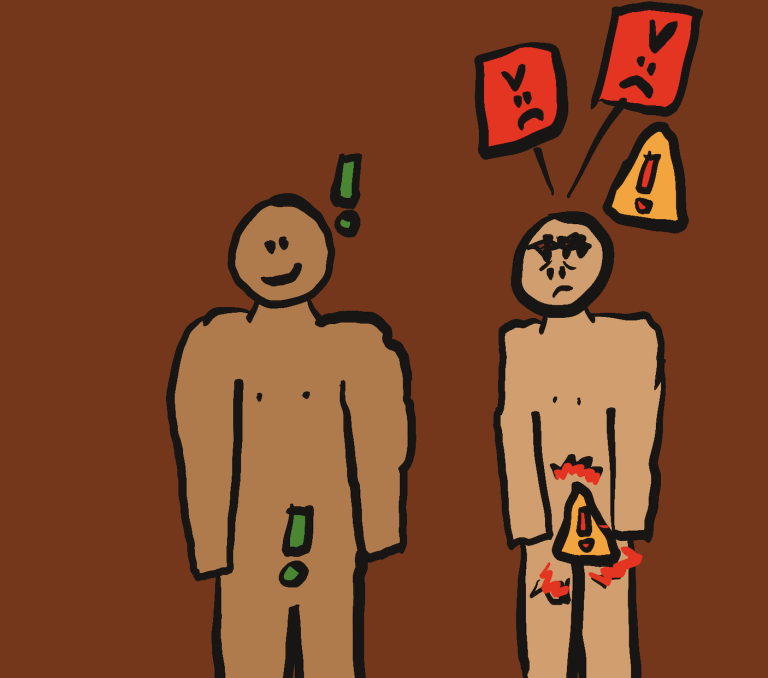
Precisely because I've experienced both hormonal systems, I understand how vast the difference is. And how little that difference is acknowledged in our society. When women laugh or disparage men's sexual needs -simply because they experience them differently- I understand where the frustration arises. Not because women are doing anything wrong, but because every person lives within their own frame of reference. And if, as a boy, you never learn that your urges are normal, but you do learn how you can temporarily control them, then in some cases, shame surrounding your sexuality can become a breeding ground for unacceptable behavior, such as misogyny. And power/priviledge can become a cover for pain.
Why the transgender bathroom abuse-debate isn't about a penis
The potency of hormones is why the whole toilet debate surrounding trans women is such a farce. The threat isn't a penis. The threat lies in testosterone, and the extent to which someone can regulate it. And if there's one thing trans women don't (want to) have, it's testosterone. The societal debate about trans women in female-dominated environments is framed purely through the lens of a male hormonal system, driven by the possible presence of a penis. Something that's anything but appropriate for trans women, who often take the female hormone: estrogen.
The power of testosterone demands responsibility
Testosterone gives you a sexual drive. But also a sense of power, potency, and influence. If you can't manage and regulate this properly as a man, I think it can turn into a need for control, objectification, and -after experiences of humiliation- violence in some men. But it doesn't have to. As a society, we could prevent a lot of suffering, abuse, and violence against women if we taught boys from a young age: your body isn't dangerous, but it does feel powerful. And that requires a healthy sense of responsibility.
Like Jung told us:
“We need to understand more of our human nature, because the only real danger is man himself.”
I think we're ready for that. But first, we have to dare to look at what it means to be a man, in your body, in your sexuality, and in the sense of influence you experience. A women's safety should never depend solely on men's ability to selfregulate. That's why it's so important that we teach boys from an early age about respect, boundaries, and the power of their own bodies, not to demonize them, but to guide them into healthy masculinity.
APA-reference:
Van Stratum, L. C. (2025). The power and responsibility of testosterone: What I learned when I became a men. Geraadpleegd op (datum), van https://eendeelvanjezelf.nl/selfmade-man/what-i-learned-when-i-became-a-man/