TPOY-2025-08-07-BBB
Consciousness, Biochemistry, and Balance: A New Perspective on (Psycho)therapy and Trauma
How the body functions as an interface for consciousness, and how trauma disrupts permeability. On the role of psychotherapy and medication in restoring attunement.
It's an age-old question: What is consciousness? And, perhaps even more frequently asked: How does the mind-body connection work? Why does psychotherapy help? Why do some people benefit from medication, while others become even more alienated? Where is the boundary between psyche, biochemistry, and the deeper layers of what it means to be human? In this article, I propose an alternative framework: the body as an interface. Not as the origin of consciousness, but as a conduit, channel, and filter, an intermediate layer that enables, distorts, or supports access to our consciousness. This perspective opens up new ways of understanding trauma, therapy, and recovery.
Our consciousness is not of the body, but it does pass through the body
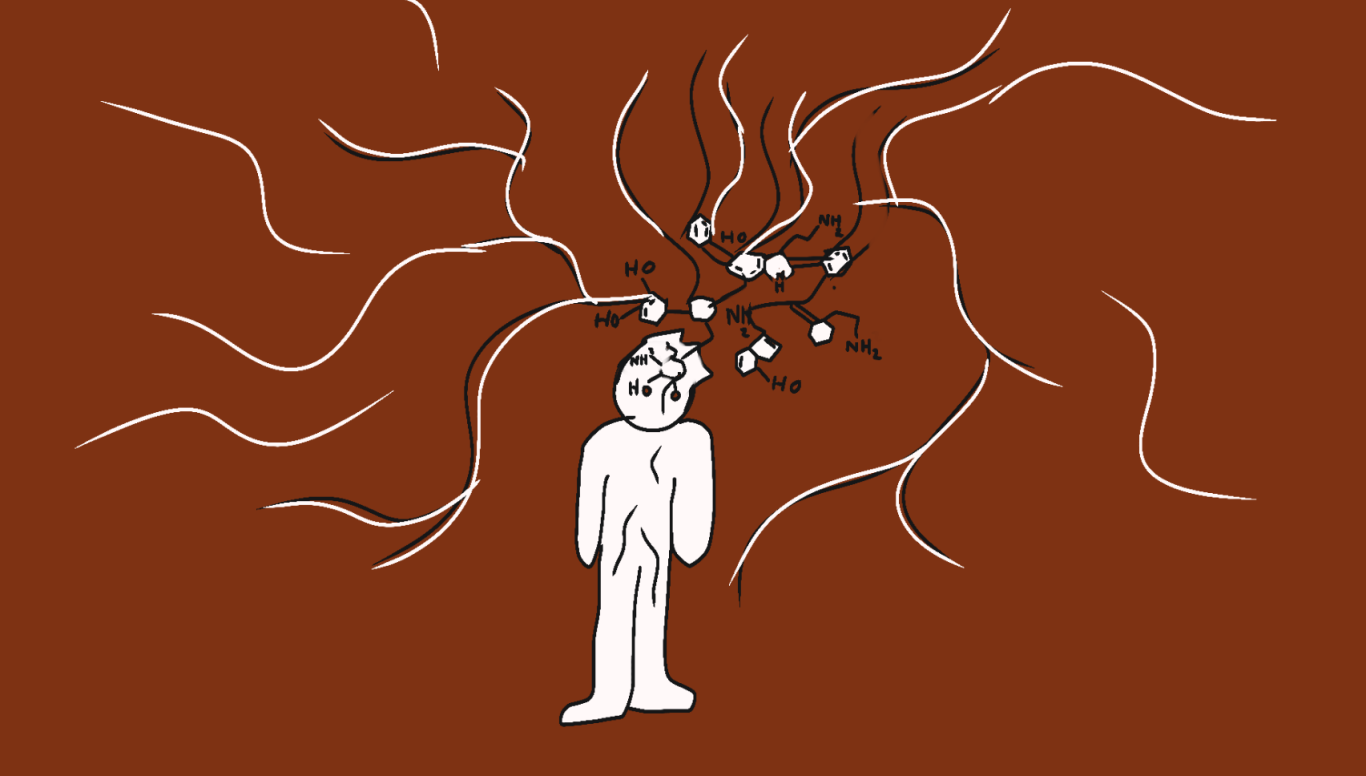
Imagine: consciousness isn't a product of the body, but a field that manifests through it. Like light passing through a lens, or sound through a speaker. In such a model, the body isn't an origin, but an interface: it determines how clear, pure, or distorted consciousness manifests within the boundaries of our humanness. Even if our consciousness is more than human, it remains bound by the physical parameters of our human experience. However vast our inner being may be, we are born in a human suit, a temporary shell that shapes the space of consciousness. We can open windows and doors in this house, sometimes even build extensions, but we cannot completely leave it.
Psychotrauma as a disruption of the interface
From this perspective, trauma is not a psychological defect, not merely physical damage, but a disruption of the permeability of the biochemical interface. The body, once an open, living channel, becomes distorted in its attunement due to trauma. Signals no longer enter cleanly. What wants to exit becomes overdriven or blocked. And the connection between the inner and outer worlds is disrupted.
Neurobiologically, this manifests as disturbances of the HPA axis, over- or underactivity of the autonomic nervous system, and biochemical imbalance. Your body remains stuck in hyperarousal, causing your consciousness to feel fragmented, overstimulated, and chaotic. Or it becomes blocked in hypoarousal, making consciousness seem dulled, absent, or disconnected.
But note: consciousness itself does not fade. It is the interface that distorts it, the interface between body and mind. Trauma touches precisely this interface: it cuts into the space where senses, nerves, sense of time, and inner perception converge.
Psychotherapy as a form of resonance restoration
So why does psychotherapy work? Because it focuses on restoring attunement. Through words, presence, regulation, or techniques like exposure, consciousness is given the opportunity to realign and anchor itself in the body. Sometimes this happens through resonance with another person, such as a therapist with a relatively clear interface, in which our own consciousness can mirror, synchronize, and calm. And sometimes consciousness itself actively participates or facilitates this attunement. Through consciously experiencing incongruities: feeling the difference between a panicked body and a neutral space. That difference makes recovery possible. Not through control, but through renewed attunement and finding balance.
Psychotropic drugs as interface tuning
And medication? Like psychotropic drugs?
They interfere with the biochemical side of the interface. They tweak the parameters by which consciousness moves within the body. In psychosis, for example, consciousness seems to be in overdrive; it reaches beyond the confines of being human, but becomes detached from its biological foundation. It is no longer in balance with the body's biochemical parameters. In depression, it seems to withdraw, as if on standby, unable to exit through the body. It is also no longer in balance with the body's biochemical parameters. For people with trauma, psychedelics -which provide a zoomed-out view of the ego- can facilitate the overview necessary for restoring the balance between disrupted biochemical parameters from trauma and its neutral environment. This is evident in research on trauma processing in combination with psychedelics. In such cases, medication such as psychotropic drugs can be a kind of interface tuning, not a solution for consciousness itself, but a restoration of the conditions in which consciousness can once again become tangible.
Concluding
If we no longer view trauma, therapy, and medication as separate domains of the psyche or biochemistry, but as aspects of a disrupted or healing interface, our entire view of humanity shifts.
We don't have to fix consciousness.
We don't have to fight the body.
We only need to make the space in between -the interface- permeable again.
Perhaps that is what healing truly is:
Not fixing consciousness, not fighting the body.
But opening the space between.
Making the interface permeable again to who we truly are.
APA-verwijzing:
Van Stratum, L. C. (2025). Bewustzijn, biochemie en balans: een nieuw perspectief op (psycho)therapie en trauma: Hoe het lichaam fungeert als interface voor bewustzijn, en hoe trauma de doorlaatbaarheid verstoort. Over de rol van psychotherapie en medicatie bij het herstellen van afstemming. Geraadpleegd op (datum), van https://eendeelvanjezelf.nl/het-idealistisch-bewustzijn/biochemie-als-interface/